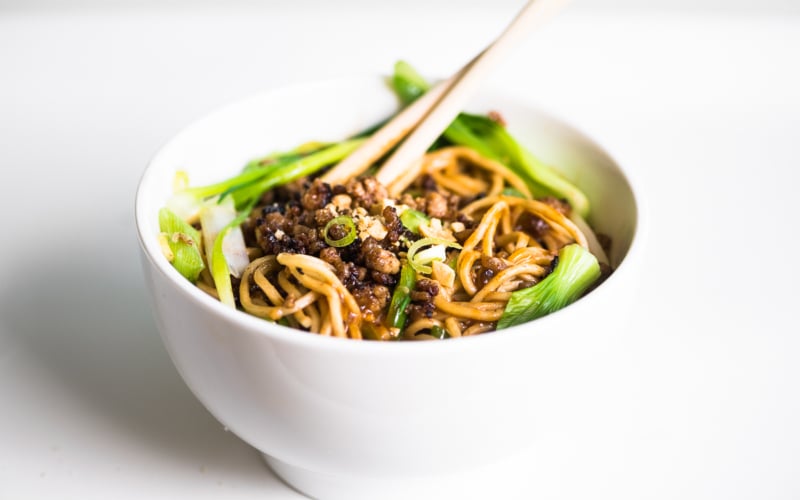

These 30-minute Dan Dan noodles are my weeknight take on the Sichuan classic ~ chewy noodles, crispy pork, barely wilted greens, and a creamy chili-sesame sauce with that unmistakable Sichuan peppercorn tingle.

Don't Lose This Recipe!
I’ve made a lot of noodle bowls over the years, and this is still one of the best things to come out of my kitchen. It has everything I want in a weeknight dinner ~ big flavor, great texture, and very little work. Best of all, my version lands on the table in about 30 minutes.
Dan Dan noodles started as Sichuan street food
Dan Dan noodles (dan dan mian) come from Sichuan, China. The name refers to the carrying poles once used by street vendors, who balanced baskets of noodles and sauce from either end as they moved through the streets. There are lots of versions, but the flavors you see again and again are wheat noodles, chili oil, Sichuan peppercorns, seasoned ground pork, and often sui mi ya cai, finely chopped preserved mustard greens.
One detail I love: the sauce traditionally goes into the bottom of the bowl, with the noodles and toppings piled over it. You toss everything together just before eating, pulling that spicy, nutty sauce up through the noodles.
My recipe keeps the Sichuan flavor, skips the specialty shopping
This is my weeknight version, so I’ve made a few practical swaps. I use dried noodles instead of fresh, prepared chili oil instead of making it from scratch, and tahini in place of Chinese sesame paste. I leave out the preserved mustard greens, which gives you one less specialty ingredient to track down.
It’s creamier and more streamlined than a traditional Chengdu-style bowl, but the combination that hooked me in the first place is all here ~ chili oil, Sichuan peppercorn, crisp pork, chewy noodles, and that rich sesame sauce.

That famous Sichuan tingle is called málà
If you’ve never cooked with Sichuan peppercorns, this is the recipe that makes their whole point clear. They aren’t hot in the same way chiles are. They have a bright, citrusy flavor followed by a tingling, gently numbing sensation on your lips and tongue.
In Sichuan cooking that combination is called málà: má is the tingle from Sichuan peppercorns and là is the heat from chiles. The tingle comes largely from a compound called hydroxy-alpha-sanshool, which activates touch-sensitive nerves in your mouth. That’s why Sichuan peppercorn feels so different from ordinary chile heat.

The everyday ingredients behind my 30-minute version
- Sichuan peppercorns ~ these give Dan Dan noodles their signature citrusy tingle. They’re not really peppercorns at all, but the dried husks of berries from the prickly ash family.
- Chinese chili oil ~ use one you like because it’s a major part of the sauce. Look for a pourable oil with plenty of red chile sediment in the jar. My homemade chili oil works beautifully here, too.
- Tahini ~ this is my easy stand-in for Chinese sesame paste. Chinese sesame paste is made from toasted sesame seeds, so it’s darker and roastier; tahini is lighter but gives this quick sauce the creamy body I want.
- Ground pork ~ keep cooking it after the pink is gone, until the seasoning liquid evaporates and you get dark, crisp little bits. That’s where so much of the flavor comes from.
- Wheat noodles ~ fresh Chinese wheat noodles are classic, but dried wheat or ramen-style noodles make this an easy pantry dinner. I like a noodle with some chew rather than something very soft or delicate.
- Baby bok choy + scallions ~ I blanch them right in the noodle pot at the end, so you get fresh greens without another pan.
If you ever want to take this version one step closer to the Sichuan original, look for sui mi ya cai at a Chinese market or online. Those salty, savory preserved mustard greens add another layer of flavor, but I still love this recipe without them.

Fresh noodles are traditional ~ dried ramen keeps this recipe easy
Dan Dan noodles are traditionally made with thin or medium Chinese wheat noodles. Fresh noodles are great if you have access to them, but I use dried Japanese ramen noodles here because they’re easy to keep on hand and have the firm, springy texture I want.
Other dried Chinese wheat noodles work well, too, and thin spaghetti will get dinner on the table in a pinch. Whatever you use, cook the noodles just until tender ~ they’ll soften a little more once they’re tossed with the sauce.

Three small moves make this recipe much better
- Get the pork truly crisp. Let the seasoning liquid cook away and keep going until you have browned, almost bacon-y bits.
- Save the noodle water. A splash loosens the sesame sauce so it coats the noodles instead of sitting heavily at the bottom of the bowl. I also use it to scrape all those browned pork bits from the skillet.
- Give the greens a quick dunk. Bok choy and scallions only need the last minute or so in the noodle pot. They stay bright and give the bowl some fresh crunch against the rich sauce.

Dan Dan noodles make great leftovers
This is one noodle dinner that reheats surprisingly well. The sauce thickens in the refrigerator, so add a small splash of water before microwaving and toss everything well once it’s hot. The leftovers may not be quite as pretty as that first bowl, but they’re every bit as satisfying.
 Add The View from Great Island as a Trusted Google Source

Dan Dan Noodles
Ingredients
pork
- 1 tsp cooking oil
- 1/2 lb ground pork
- 2 tsp Hoisin sauce
- 2 tsp Mirin
- 1 tsp Tamari soy sauce
- 1/2 tsp five spice powder
noodles
- 9 ounce package dried ramen noodles, I use Hakubaku
sauce
- 2 Tbsp tahini, an easy-to-find stand-in for Chinese sesame paste.
- 3 Tbsp soy sauce
- 2 tsp sugar
- 1/2 tsp five spice powder
- 1/2 tsp ground sichuan peppercorns (I did this in my coffee/spice grinder)
- 1/3 cup chili oil, chili oils vary enormously in heat. Mine is mild enough to use the full 1/3 cup; if yours is fiery, start with 2 tablespoons and add more to taste.
- 2 cloves garlic, minced
- 1 tsp grated fresh ginger
veggies
- 1 bunch scallions, trimmed and sliced in half lengthwise
- 2 or 3 baby bok choy, trimmed and sliced lengthwise
garnish
- chopped peanuts
Instructions
- Set a large pot of water to boil on the stove.
- Put the oil in a skillet and heat on medium high. Brown the pork, breaking it apart into crumbles as it cooks. When it has cooked through, add the Hoisin, Mirin, soy and spice powder and continue to cook until the liquid has evaporated and the meat is nice and crispy. Remove the meat to a plate.
- Cook the noodles according to the package instructions, this is usually just a few minutes. At the last minute, add the greens to the boiling water. Reserve about a cup of the cooking water, then drain.
- Add 1/3 cup of the cooking water to the pork skillet, and scrape up the browned bits from the bottom, off the heat.
- Whisk the sauce ingredients to combine. Note: you're not cooking the sauce, just mixing it. Taste to adjust any of the ingredients to your liking. Add a little more noodle water if you like it thinner. Divide the sauce equally between 4 bowls.
- Top the sauce with the noodles and wilted veggies. Then spoon the crispy pork over top.
- Garnish with chopped peanuts. Toss the noodles with the sauce before eating.
Notes
Nutrition
more noodle + Sichuan-inspired recipes

Quick Chili Oil Noodles
Szechuan chili oil noodles are a famously easy late night meal, but these spicy Chinese noodles are welcome any time, especially after a busy day. When you're fiercely hungry, totally beat, and short on time and ingredients, this recipe comes to the rescue.

Homemade Chili Oil
This classic Chinese chili oil is a common ingredient in so many of my favorite Asian dishes, and this easy homemade recipe is absolutely spot on in every way. Now I save money, and never run out of my favorite condiment.

Easy Chinese Scallion Pancakes (Congyoubing)
These easy Chinese scallion pancakes are flaky, chewy, and make a fabulous appetizer or light meal. Don't forget the perfect dipping sauce!

Weeknight Mapo Tofu
Weeknight Mapo tofu is a one pan wonder! Tofu with ground pork and green onions in a black bean and garlic sauce with Sichuan pepper has authentic flavor, but simplified just enough so you can make it any night of the week without compromising that unique character.

Chinese Burning Noodles
Burning Noodles are a simple and delicious Sichuan noodle bowl made in 30 minutes!

Vegan Dan Dan Noodles
Vegan dan dan noodles is a plant based version of our favorite weeknight meal ~ this easy Chinese noodle bowl has got all the flavor without the meat!





This is a winner—very tasty. I used linguini for my noodles and Aleppo pepper for the Sichuan peppercorns, but otherwise I had the appropriate Asian flavorings. I used only 2 T. chili oil, as 1/3 cup sounded like a lot. And I cooked the sauce for about 2 minutes because of the garlic–I didn’t want to leave it raw. I needed to use a little of the noodle water with the pork. Will definitely be making this again.
Thanks Mary, glad you enjoyed it!
I will add my rating now as for some reason the rating didn’t make it the first time.
We made this recipe last night and although the flavours were amazing, the heat was intense! Even my husband who eats extremely hot spicy foods was overwhelmed! Also there was not enough veg in it so I think next time (and there definitely will be a next time!) I will cut the chili oil in half and add some thinly sliced carrots. I adored the Sichuan pepper which I have never used before. We used ramen noodles which I thought was a good choice as the ribbon-like shape held the sauce perfectly.
I made this to fulfill the Asian tradition of noodles on New Year’s to ensure longevity and it was sooooooo good! Usually do a Japanese noodle like yaki soba or ramen so this was a big change and I already know it’s going into regular rotation. I know the recipe says it serves four but I can tell you it was perfect for the one big eater in the house and one normal eater. So if you are cooking for a crowd, double or triple it up! I did make my own chili oil the day before and that was really worth the effort. Another home run recipe. Thanks, Sue!
Quick note that I made this again last night and used dry Japanese Udon Noodles. Wel-Pac brand, from Australia, non-GMO made with wheat flour, sea salt and water. Found at our local Albertsons. Cooked for 12 minutes rather than the 14-16 recommended. Had the perfect al dente bite and these were universally preferred over the ramen and lo mein noodles I used last week. Just an FYI out there if you want to try another noodle. These worked great!
Made this recipe tonight – delicious!!!
I love noodles – especially in winter or on a rainy day. This recipe (Dan Dan) was awesome. Thanks Sue. I can’t wait to try the peanut butter noodles too!
You say you have figured out how to make this without the pork, yet I see no such recipe. Will you tell how to make without meat? Do you just eliminate it?
You clicked on the regular dan dan noodle recipe, the vegetarian version is in another post, here.
I am going to make this over the weekend, but am wondering will Shaohsing (rice cooking wine) be okay versus the Mirin? Or will it completely change the taste?
This was amazingly delicious. I made this last night and we were just so excited to find another dish that was easy and simple and taste great. I only boiled enough noodles for 2 and we ate it 2 nights in a row and it was just as good for leftovers.
So happy you loved it Jan 🙂 And I agree about the leftovers, it’s rare with any type of pasta or noodle dish to be able to really enjoy it the next day.
This recipe is so ridiculously delicious. I have made it before, but tonight I actually had all of the correct ingredients. Wow! Just amazing. Just a tiny bit of heat that is barely noticeable. Did I say DELICIOUS? Thank you Sue. Your recipes are fabulous!
I’m especially glad you love this one Mary because it’s such a favorite of mine 🙂